How to Earn Interest on Cryptocurrency Using DeFi
Discover the different ways to earn passive income on your crypto holdings through DeFi services, from lending to liquidity provision.
TL;DR: You can earn yield on crypto through lending (deposit and earn interest), liquidity provision (earn trading fees), staking (lock tokens for rewards), or yield aggregators (automated optimization). Yields range from 3-50%+ depending on risk. Start with stablecoin lending for lower risk, or explore liquidity provision for higher potential returns.
Holding cryptocurrency doesn't have to mean watching it sit idle in your wallet. Through decentralized finance (DeFi), you can put your crypto to work and earn interest or yield on your holdings. Here's how it works.
Ways to Earn Interest on Crypto
There are several methods to earn passive income on cryptocurrency, each with different risk and reward profiles.
1. Lending Platforms
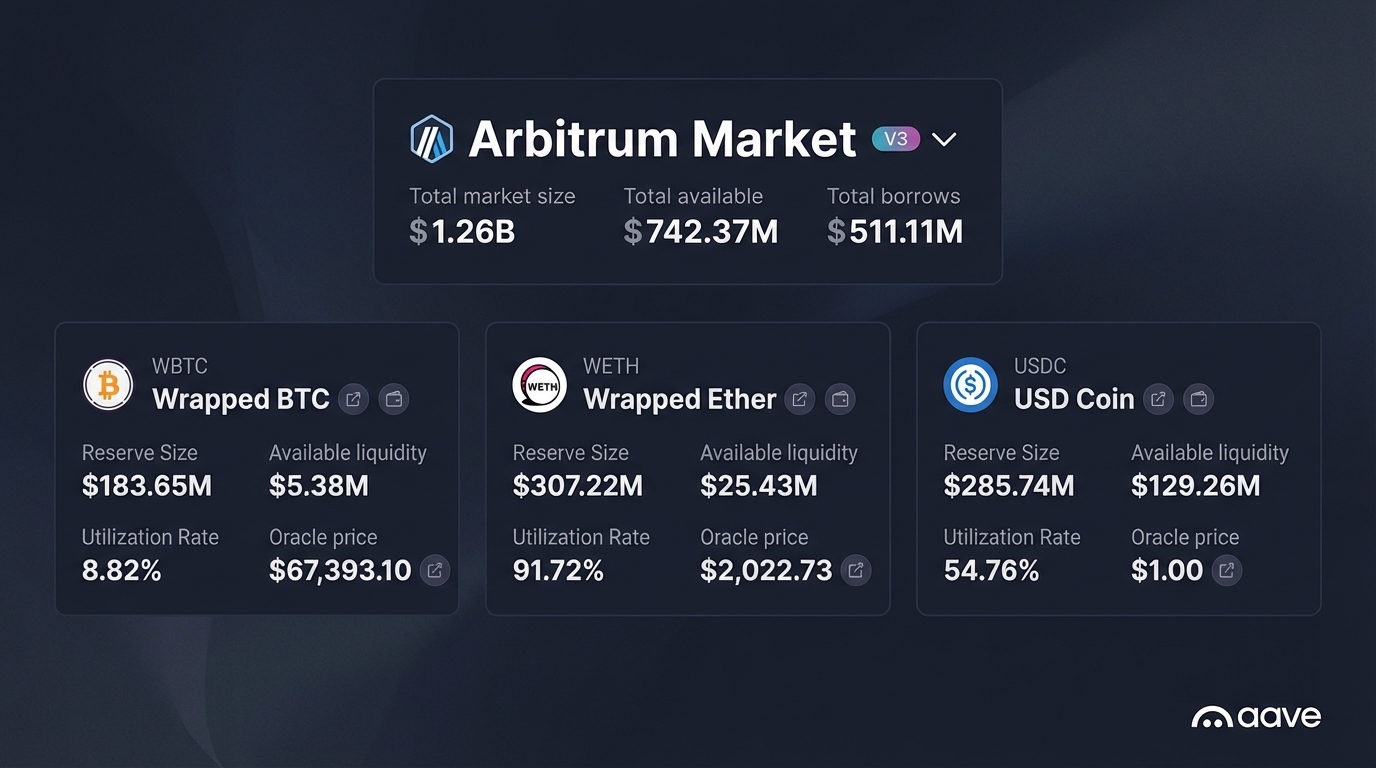
Lending is one of the simplest ways to earn yield. You deposit your crypto into a lending protocol, and borrowers pay interest to use it.
How it works:
- Deposit tokens (like USDC, ETH, or WBTC) into a lending protocol
- Borrowers take loans against their own collateral
- You earn interest from the borrowers' payments
- Withdraw your deposit plus earned interest anytime
Popular lending protocols: Aave, Compound, Venus
Typical yields: 1-10% APY depending on the asset and market conditions
Risks: Smart contract vulnerabilities, utilization rate changes, potential bad debt if borrower collateral fails
2. Liquidity Provision
When you provide liquidity to a decentralized exchange (DEX), you earn a share of trading fees from every swap that uses your liquidity.
How it works:
- Deposit a pair of tokens (like ETH and USDC) into a liquidity pool
- Traders swap between these tokens and pay fees
- You earn a proportional share of those fees based on your contribution
- Withdraw your liquidity when ready
Popular DEXs: Uniswap, PancakeSwap, SushiSwap
Typical yields: Highly variable, from 5% to 100%+ APY depending on trading volume and pool
Risks: Impermanent loss (explained below), smart contract risk, token price volatility
3. Staking
Many blockchain networks and protocols reward users for "staking" tokens to help secure the network or participate in governance.
How it works:
- Lock your tokens in a staking contract
- Earn rewards (usually paid in the same token)
- Unstake when the lock period ends
Examples: Staking ETH on Ethereum, staking protocol tokens for governance rewards
Typical yields: 3-15% APY depending on the protocol
Risks: Lock-up periods, slashing (in some protocols), token price decline during staking
4. Yield Aggregators
Yield aggregators automatically move your funds between different DeFi protocols to maximize returns. They handle the complexity of finding the best yields.
How it works:
- Deposit into a yield aggregator vault
- The protocol automatically compounds rewards and optimizes positions
- Withdraw your increased balance anytime
Benefits: Saves gas fees from manual compounding, finds optimal strategies automatically
Risks: Additional smart contract layer, aggregator fees, underlying protocol risks
Understanding Impermanent Loss
If you're considering liquidity provision, you need to understand impermanent loss (IL).
When you provide liquidity to a trading pair, the ratio of your tokens changes as people trade. If the price of one token moves significantly compared to when you deposited, you might end up with less value than if you had simply held the tokens.
Example:
- You deposit $1,000: 0.5 ETH ($500) + 500 USDC ($500)
- ETH price doubles from $1,000 to $2,000
- Your position rebalances to roughly 0.35 ETH + 707 USDC = $1,414
- If you had just held: 0.5 ETH + 500 USDC = $1,500
- The $86 difference is your impermanent loss
The loss is "impermanent" because if prices return to the original ratio, the loss disappears. It only becomes permanent when you withdraw.
Key insight: Trading fees can offset impermanent loss. High-volume pools with concentrated trading ranges often generate enough fees to make liquidity provision profitable despite IL.
Concentrated Liquidity: Higher Yields, More Control
Modern DEXs like Uniswap V3 introduced "concentrated liquidity," letting you focus your capital within a specific price range.
Traditional liquidity: Your capital is spread across all possible prices (0 to infinity)
Concentrated liquidity: You choose a price range where your capital is active
Why it matters: By concentrating your liquidity, you earn more fees from the same capital. A $1,000 position concentrated in a tight range might earn fees like a $10,000 position spread across all prices.
The tradeoff: If the price moves outside your range, you stop earning fees and your position converts entirely to one token.
Platforms like DeFihub make concentrated liquidity accessible by letting you select ranges and manage positions through a simplified interface.
Choosing the Right Strategy
Your ideal yield strategy depends on several factors:
Risk Tolerance
| Strategy | Risk Level | Typical Yield |
|---|---|---|
| Stablecoin lending | Lower | 3-8% APY |
| Blue-chip token lending | Moderate | 1-5% APY |
| Liquidity provision (stable pairs) | Moderate | 5-20% APY |
| Liquidity provision (volatile pairs) | Higher | 10-100%+ APY |
| Yield farming with incentives | Higher | Variable |
Capital Size
- Small amounts: Focus on lower-fee networks like Polygon or BNB Chain where gas costs won't eat your profits
- Larger amounts: Can afford higher-fee networks; consider diversifying across strategies
Time Commitment
- Passive: Lending, staking, or yield aggregators require minimal management
- Active: Concentrated liquidity and yield farming may need regular attention to optimize
Combining Strategies
Advanced DeFi users often combine multiple strategies. For example:
- DCA + Liquidity: Dollar-cost average into a token while simultaneously earning fees from providing liquidity
- Lend + Borrow + Provide: Deposit collateral, borrow stablecoins, provide liquidity with borrowed funds
- Multi-pool diversification: Spread liquidity across several pools to reduce single-point risk
Platforms like DeFihub let you create "Strategies" that combine multiple positions (DCA, liquidity, direct buys) into a single investment, simplifying portfolio management.
Tax Considerations
Earning yield on crypto typically creates taxable events. Depending on your jurisdiction:
- Interest and staking rewards may be taxed as income when received
- Selling or swapping tokens may trigger capital gains
- Some DeFi activities create complex tax situations
Keep records of all transactions. Consider using crypto tax software or consulting a tax professional familiar with digital assets.
Getting Started
Ready to earn yield on your crypto? Here's a practical approach:
- Start with lending - It's the simplest to understand and lower risk
- Try a stablecoin pool - Earn fees without exposure to volatile token prices
- Gradually explore - As you get comfortable, try concentrated liquidity or more complex strategies
- Use beginner-friendly tools - Platforms that simplify DeFi can help you avoid costly mistakes
The Sustainable Approach
Chase yield responsibly. Extremely high APYs often indicate:
- High risk (volatile assets, untested protocols)
- Temporary incentives that will decrease
- Potential scams or unsustainable economics
A sustainable approach focuses on realistic yields from legitimate sources: trading fees, lending interest, and protocol rewards from established projects.
Your goal isn't just to earn yield. It's to earn yield while managing risk appropriately and maintaining custody of your assets.
Interested in earning yield on your crypto? Research protocols thoroughly, start small, and diversify across strategies to manage risk.